
How Spotlightwebs Builds and Optimises Websites for SEO Growth
Our complete process for WordPress website development, technical SEO, content optimisation, analytics and long-term organic growth.

Successful website promotion is not based on isolated SEO tasks. It requires a coordinated strategy that combines market research, website development, technical optimisation, content, authority building, analytics and continuous improvement.
At Spotlightwebs, we create and optimise websites that are designed to perform across search engines, AI-powered search platforms and modern devices. Every project starts with a detailed understanding of the business, its audience and its commercial goals.
Whether we are building a new WordPress website or improving an existing one, our objective remains the same: to create a fast, technically reliable and search-friendly digital platform that attracts relevant visitors and converts them into enquiries, bookings or customers.
Table of Contents
Understanding the Market Before Building the Strategy
Before making changes to a website, we analyse the business environment in which it operates. This allows us to develop a strategy based on real search demand, customer behaviour and competitive conditions rather than assumptions.
We examine:
- the company’s services, products and commercial objectives;
- the characteristics and needs of the target audience;
- customer pain points and search behaviour;
- current market demand;
- direct and indirect competitors;
- the websites ranking on the first page of Google;
- opportunities that competitors have not fully covered.
Competitor analysis is not limited to checking keywords. We review website structure, content depth, landing pages, backlink profiles, technical performance, user experience and conversion elements.
This research helps us determine which approaches are already producing results in the market and where the client can build a stronger competitive advantage.
Let’s Discuss Your Project
Not sure whether your business needs a new website, a technical SEO audit or an ongoing optimisation strategy?
Book a free consultation with Spotlightwebs. We will discuss your website, business goals and current challenges, identify the most important opportunities and recommend the most appropriate next steps.
Initial Website Assessment
For existing websites, we also conduct an initial audit to identify:
- current organic visibility;
- ranking pages and search queries;
- technical weaknesses;
- content gaps;
- indexing problems;
- usability issues;
- performance limitations;
- lost traffic opportunities.
Based on the findings, we create an individual website development and SEO plan. We do not apply the same template to every business because every industry, website and audience requires a different approach.

Website Strategy, Structure and Development
Building Websites Around Search Demand and Business Goals
A website should not simply look attractive. It should have a clear structure, support the customer journey and help search engines understand the business. When creating a new website, we plan its architecture before the design and development process begins. This ensures that important services, locations, categories and customer questions are represented by appropriate pages.
The website structure may include:
- core service pages;
- product or category pages;
- location-specific landing pages;
- informational resources;
- blog sections;
- case studies;
- FAQ pages;
- conversion-focused contact and booking pages.
We create WordPress websites ranging from professional business websites and landing pages to more complex service platforms, online shops and content-based websites.
Responsive WordPress Website Development
Every website is developed to display correctly on desktop computers, tablets and mobile devices. Our development process focuses on:
- responsive layouts;
- clear navigation;
- logical page hierarchy;
- accessible content;
- fast loading times;
- stable visual performance;
- secure and maintainable WordPress configuration;
- flexible page management;
- integration of forms, payments, CRM systems and analytics.
The website is built not only for its current requirements but also with future growth in mind. New services, locations, products and content sections can be added without rebuilding the entire platform. Where required, we also provide practical guidance so that the client can confidently manage essential website content after launch.

Keyword Research and Search Intent Analysis
Creating a Search Strategy Based on Real Demand
Keyword research identifies how potential customers search for products, services and information online. We collect and evaluate search queries related to:
- the company’s core services;
- products and service categories;
- customer problems;
- commercial searches;
- informational questions;
- local and regional demand;
- competitor visibility;
- long-tail keyword opportunities.
Keywords are evaluated not only by search volume. We also consider relevance, competition, commercial value, search intent and the type of results Google displays.
Keyword Clustering and Page Mapping
After collecting the search queries, we organise them into logical groups based on user intent and search engine results. Keyword clustering helps us determine:
- which queries can be targeted on the same page;
- which topics require separate landing pages;
- how the website structure should be expanded;
- where existing pages compete with one another;
- which pages should target commercial or informational searches.
Each important keyword group is assigned to the most appropriate page. This prevents unnecessary keyword overlap and creates a clear connection between search demand, website architecture and content development.
Technical SEO Audit and Optimisation
Creating a Strong Technical Foundation
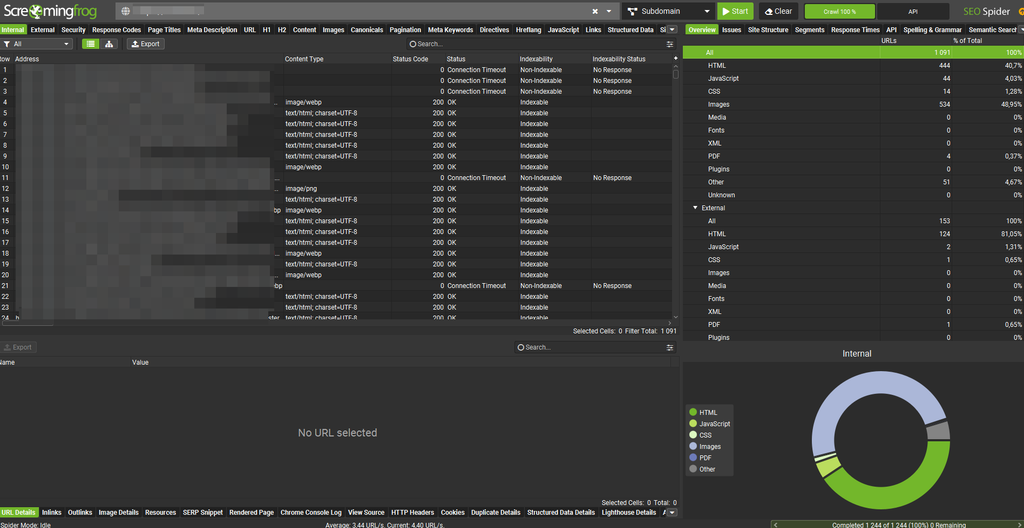
Technical SEO ensures that search engines can access, understand, index and rank the website correctly. During the audit, we examine the internal structure and technical condition of the website, including:
- website crawlability;
- page indexing;
- robots.txt configuration;
- XML sitemap setup;
- URL structure;
- status codes;
- broken links;
- redirect chains;
- 301 redirects;
- duplicate pages;
- canonical tags;
- metadata;
- heading structure;
- internal linking;
- pagination;
- multilingual website configuration;
- structured data;
- breadcrumb navigation;
- image optimisation;
- JavaScript and CSS performance;
- mobile usability;
- website security;
- hidden or inaccessible content.
We use professional SEO and analytics tools to identify problems that may not be visible during a standard visual review.
Website Speed and Core Web Vitals
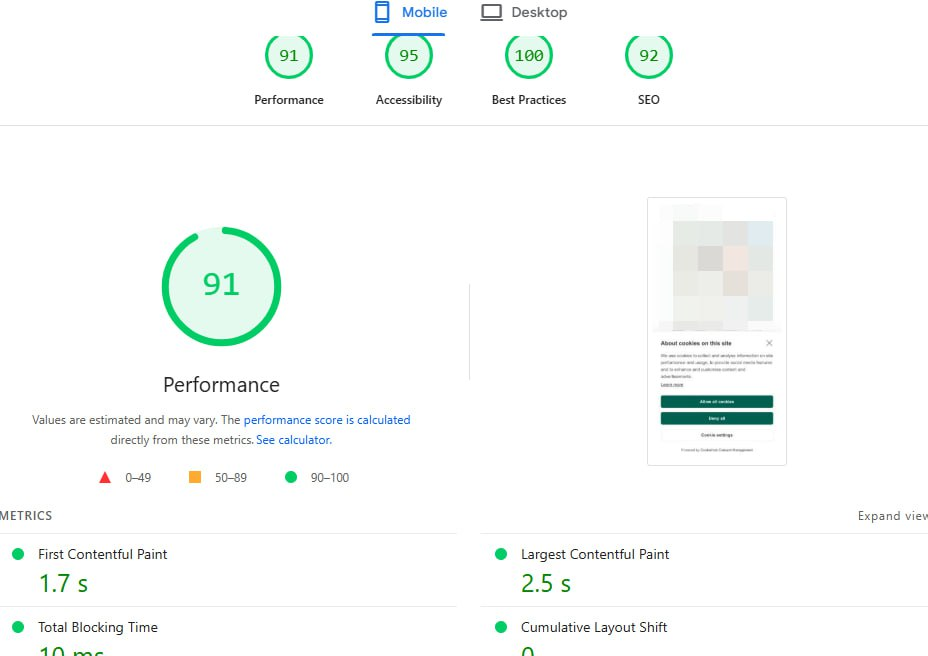
Website performance affects both user experience and organic visibility. We analyse loading speed and Core Web Vitals across desktop and mobile devices. Depending on the website, optimisation may include:
- image compression and next-generation formats;
- removal of unnecessary scripts;
- CSS and JavaScript optimisation;
- caching configuration;
- database optimisation;
- font loading improvements;
- layout stability corrections;
- hosting and server recommendations;
- plugin and theme performance review.
A faster website can improve engagement, reduce abandonment and make it easier for visitors to complete an enquiry, booking or purchase.
Google Penalties and Serious Indexing Issues
In some cases, a website may have significant indexing problems, a history of manipulative SEO activity or visibility losses following a Google algorithm update.
Before continuing with content or link building, we identify and address the underlying cause. Promoting a website without resolving critical technical or quality issues usually wastes time and budget.
On-Page SEO and Content Optimisation
Improving Existing Website Pages
Once the website structure and technical foundation are clear, we optimise individual pages.
On-page SEO may include:
- title tag optimisation;
- meta description creation;
- H1–H6 heading structure;
- search intent alignment;
- content restructuring;
- keyword integration;
- internal linking;
- image optimisation;
- URL improvements;
- schema markup;
- FAQ sections;
- conversion elements;
- optimisation of search result snippets.
The objective is not to place as many keywords as possible on a page. Each page should provide a complete, useful and clearly organised answer to the user’s search.
SEO Copywriting and Content Development
Strong content helps a website demonstrate expertise, relevance and trust. Based on the keyword strategy, we prepare content plans and briefs for:
- service pages;
- product and category descriptions;
- local landing pages;
- blog articles;
- guides;
- comparison pages;
- FAQs;
- case studies;
- supporting informational content.
Content is written for people first while remaining easy for search engines and AI systems to interpret. Where appropriate, we expand the website structure with new pages to cover additional customer needs and relevant search topics.
Visibility in Search Engines and AI Search
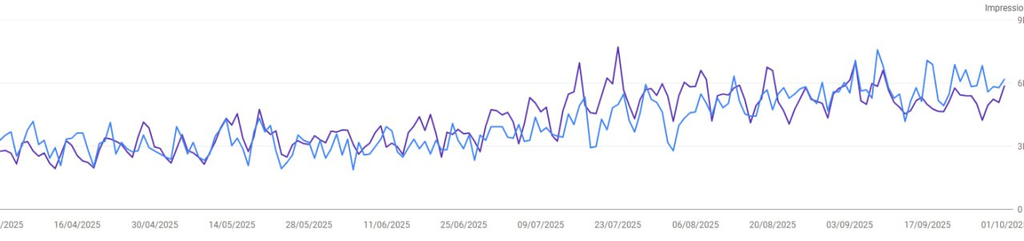
Search behaviour is changing. People now discover businesses not only through traditional Google results but also through AI-generated answers and conversational search platforms. We structure content so that important information is clear, specific and easy to extract. This may include:
- direct answers to common customer questions;
- logically organised headings;
- clearly defined services;
- entity-focused content;
- structured data;
- transparent business information;
- expert explanations;
- locally relevant details;
- original examples and evidence.
These improvements support visibility across traditional search results and emerging AI-powered discovery environments.
Internal Linking and Website Architecture
Helping Users and Search Engines Navigate the Website
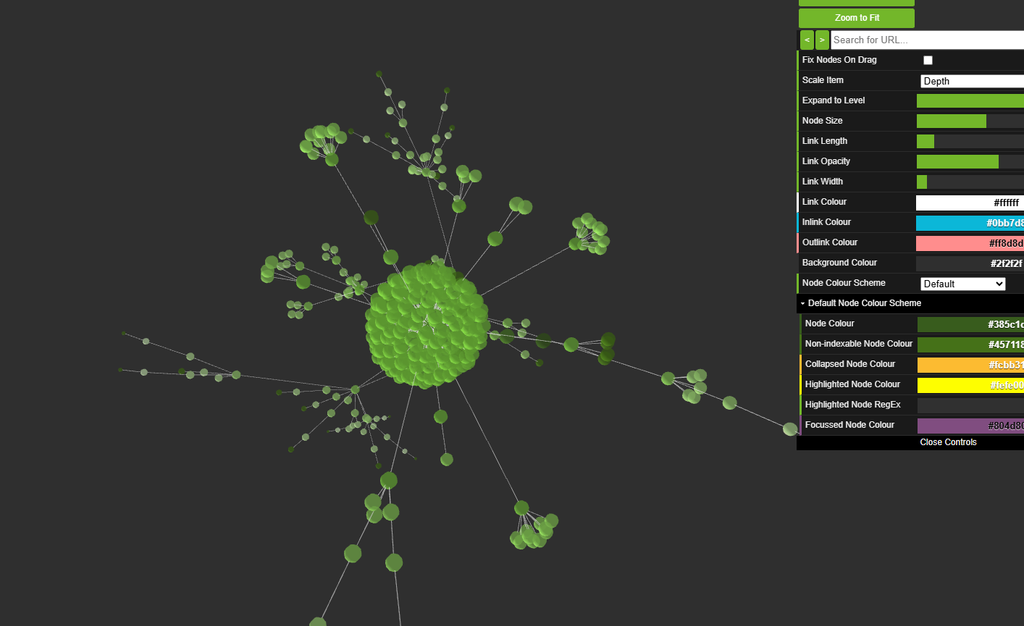
Internal links connect related pages and distribute authority throughout the website.
We develop an internal linking structure that helps:
- users find relevant services and information;
- search engines discover important pages;
- strengthen priority landing pages;
- clarify relationships between topics;
- reduce orphaned content;
- improve website navigation;
- support deeper page engagement.
Internal links are added contextually rather than inserted randomly. The anchor text and destination page should always be relevant to the surrounding content. A well-planned internal structure is especially important for websites with many services, locations, products or blog articles.
Authority Building and Off-Page SEO
Developing a Relevant Backlink Profile
High-quality backlinks from relevant and trustworthy websites can strengthen domain authority and support organic growth. Our off-page SEO approach focuses on quality rather than volume.
Depending on the project, the strategy may include:
- industry-relevant website placements;
- business directory optimisation;
- local citations;
- digital PR opportunities;
- partner and supplier links;
- editorial content;
- expert contributions;
- brand mentions;
- content assets that naturally attract references.
We assess the relevance, authority and credibility of potential linking sources before recommending or pursuing a placement.
Backlink Profile Review
Existing websites may already have low-quality, irrelevant or manipulative backlinks.
We analyse the backlink profile to identify:
- suspicious linking domains;
- unnatural anchor text;
- irrelevant links;
- previous mass link-building activity;
- lost valuable links;
- competitor link opportunities.
Mass purchasing of low-quality backlinks is not a sustainable SEO strategy. Poor link building can damage trust, create unnecessary risk and make future promotion more difficult.
Conversion Rate and User Experience Optimisation
Turning Organic Traffic Into Business Results
Ranking positions and traffic are important, but they are not the final objective.
A website should encourage visitors to take a meaningful action, such as:
- submitting an enquiry;
- requesting a quotation;
- booking a consultation;
- calling the business;
- purchasing a product;
- registering for a service;
- visiting a physical location.
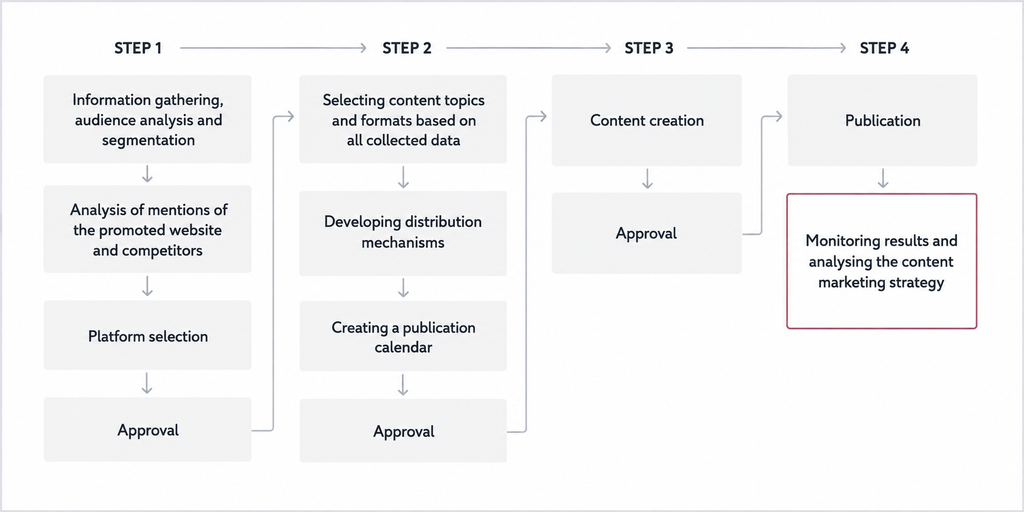
We evaluate how users interact with the website and where they may experience uncertainty, friction or confusion.
Conversion optimisation may include:
- improving calls to action;
- restructuring service pages;
- simplifying forms;
- strengthening trust signals;
- clarifying prices or service processes;
- improving mobile navigation;
- reorganising page content;
- adding FAQs;
- improving buttons and contact options;
- refining the visual hierarchy;
- testing page layouts;
- improving search snippets to increase click-through rate.
The aim is to create a website that is easy to understand and makes the next step clear.
Analytics and Performance Tracking
Measuring What Actually Matters
SEO and website development should be supported by accurate data.
We configure and review analytics systems such as:
- Google Analytics 4;
- Google Search Console;
- Google Tag Manager;
- Bing Webmaster Tools;
- conversion tracking;
- contact form tracking;
- telephone and button click tracking;
- e-commerce events;
- booking and enquiry tracking.
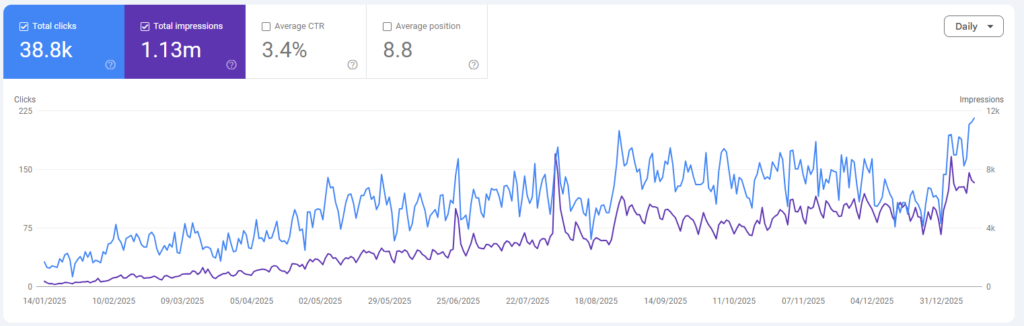
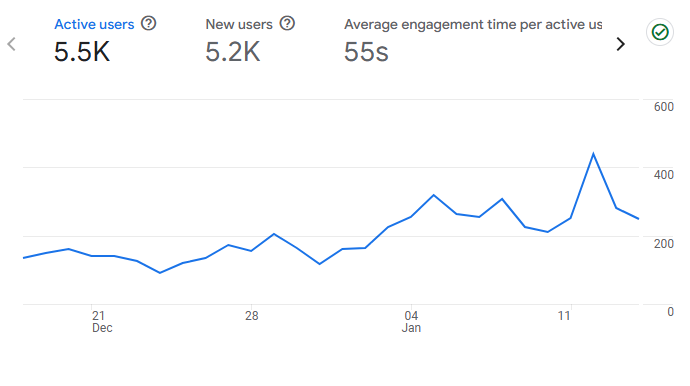
Analytics allows us to understand not only how many people visit the website but also which pages, queries and traffic sources contribute to business results.
Performance Evaluation
Depending on the project, we monitor:
- organic traffic;
- keyword visibility;
- impressions and clicks;
- search engine positions;
- indexed pages;
- conversions;
- engagement;
- landing page performance;
- technical health;
- Core Web Vitals;
- backlink growth;
- local search visibility.
This information helps us identify what is working and where additional improvements are required.
Reporting and Continuous Optimisation
An Ongoing, Data-Led Process
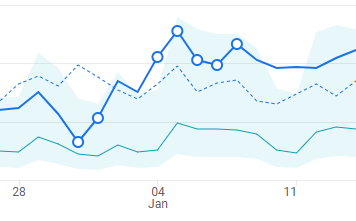
SEO is not a one-time website update. Search results, competitors, user behaviour and algorithms continue to change.We regularly evaluate performance and adjust the strategy based on collected data.
Ongoing optimisation may include:
- updating priority pages;
- improving content that is close to ranking;
- resolving new technical issues;
- expanding successful topics;
- improving internal links;
- adapting to algorithm changes;
- reviewing competitor activity;
- strengthening conversion paths;
- creating new landing pages;
- identifying emerging keyword opportunities.
Clients receive clear information about the work completed, current performance and recommended next steps. We avoid reports filled with unexplained metrics. Our reporting focuses on practical outcomes, progress and actions that support long-term business growth.
A Complete Website and SEO Solution
Spotlightwebs provides both one-time services and ongoing website support.
We can help with:
- WordPress website creation;
- website redesign and redevelopment;
- technical SEO audits;
- complete SEO strategies;
- keyword research;
- local SEO;
- content optimisation;
- SEO copywriting;
- website speed optimisation;
- Core Web Vitals;
- analytics configuration;
- website maintenance;
- conversion optimisation;
- search and AI visibility;
- continuous SEO support.
Every project is approached individually. We consider the current condition of the website, the competitive environment, available resources and the client’s business priorities. The result is not simply a website or a list of SEO tasks. It is a structured digital platform designed to support visibility, credibility, customer acquisition and sustainable business growth.
Let’s Discuss Your Project
Not sure whether your business needs a new website, a technical SEO audit or an ongoing optimisation strategy?
Book a free consultation with Spotlightwebs. We will discuss your website, business goals and current challenges, identify the most important opportunities and recommend the most appropriate next steps.